Category: lucidcode INSPEC


INSPEC Video Feed

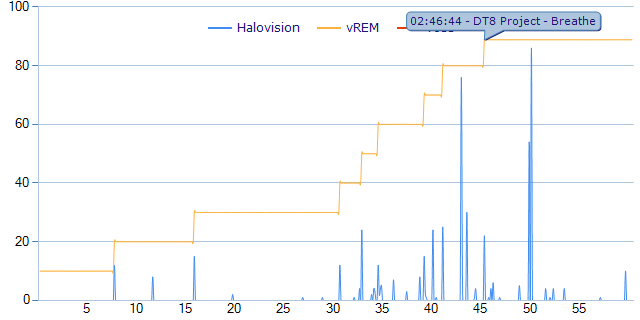
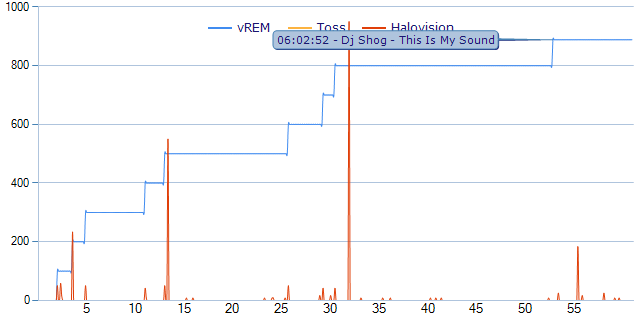
Lucid Scribe can now tap into the video feed from the INSPEC camera if it is plugged in via USB, which will allow for parallel tests against the algorithm on the device’s firmware. Recorded 3 positives and 0 false positives with audio on mute for testing.

Download entry as Lucid Scribe Data (LSD) (108 MB).

Face Recon

0400

The INSPEC can now look for faces and only looks for eye movements within the area of a face, nuking a whole host of false positives from sleep artifacts like breathing. Sleep talking still gets past it – too shy to post a clip of that, but I figure if you are sleep talking there is a good chance you are dreaming and the inhibition of motor neurons from REM atonia just isn’t working around the mouth muscles.

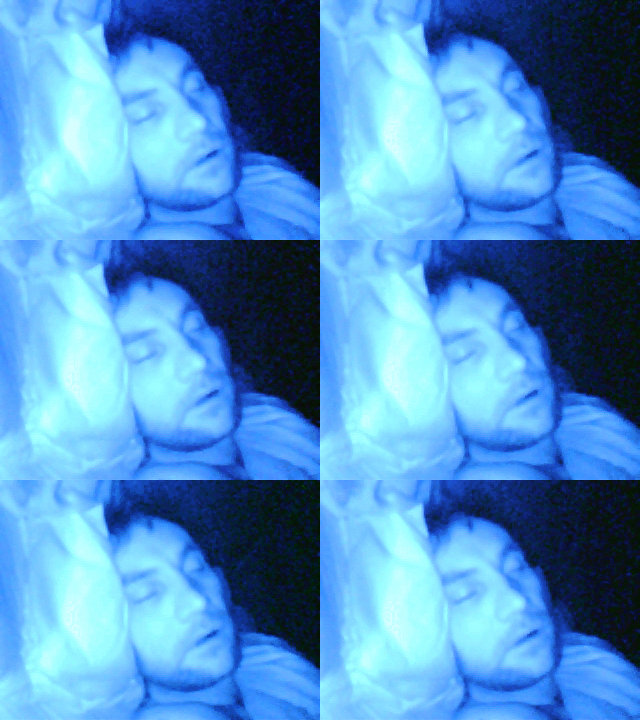
The video above shows some eye movements at 4 am with the algorithm looking for a face multiple times a second. In order for the facial algorithm to work, I have to bend the “neck” of the device so it can see my face in portrait mode. The flexible tripod works perfectly for that.
I sometimes feel guilty about how hard the INSPEC has to work all night, but I am making it in hope of spreading lucidity, so at least it is for a worthy cause.

Human Perspective

I added some more configuration options to the settings and the algorithm still worked! It picked up the eye movements when I was lying on my back with my head tilted slightly.

The device doesn’t have a clock when it is unplugged, so the date can now be configured if you want kind-of accurate timestamps on the files. It hovers on an insect-like tripod so the camera angle can now be controlled much better.

This recording better illustrates what the bitmaps look like that are saved to the SD card when eye-movement patterns are detected. Larger movements, especially in the mornings when there is some light from the rest of the spectrum still produce the deep-dream like images.

Deep Dream

I want to believe I almost have the perfect version of the halovision device. Down to the size of a matchbox; no screen – only a night-vision camera, infrared LEDs and a processor powerful enough to run the latest machine vision algorithms at a decent rate. It records short GIFs along with BMP stills to a SD card and triggers bright LEDs when eye-movement patterns are detected after a long enough still phase. I don’t think I can make the GIFs as high-res as these “research” grade ones, I’m afraid, but good enough to see what it was detecting to help get into position. Woo hoo!