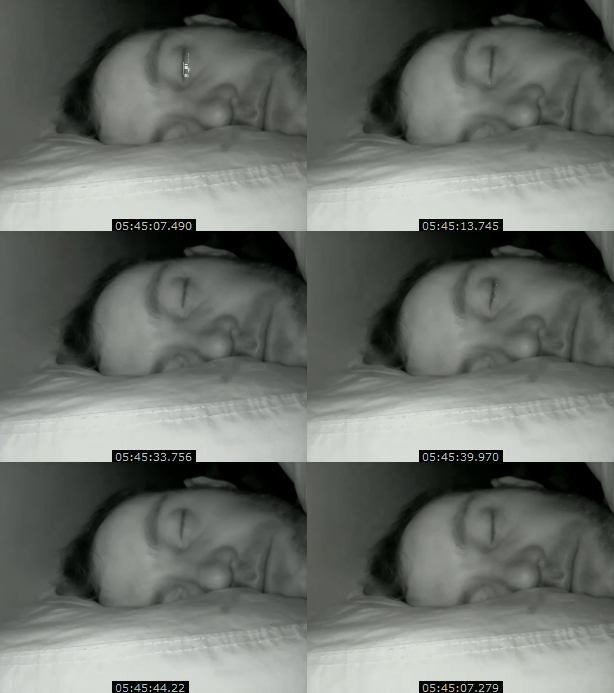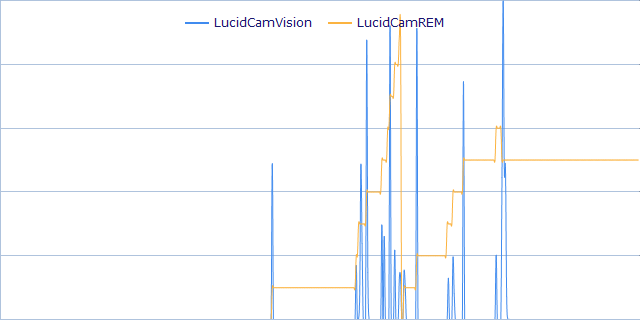
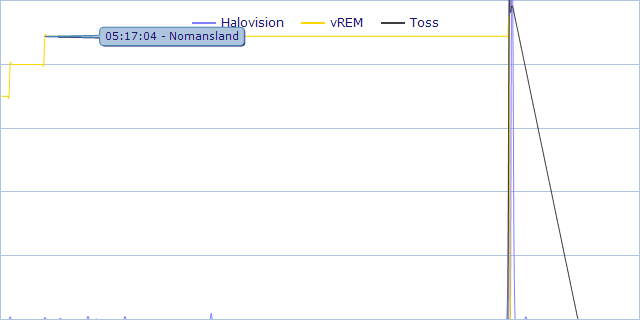
Another short LD (10 seconds) 30 minutes after the last one (6h00), in between, I didn’t get much REM but getting LD after 2 minutes of DreamDownload entry as Lucid Scribe Data (LSD)

Download entry as Lucid Scribe Data (LSD)

Download entry as Lucid Scribe Data (LSD)

|
|
|
|
|
|
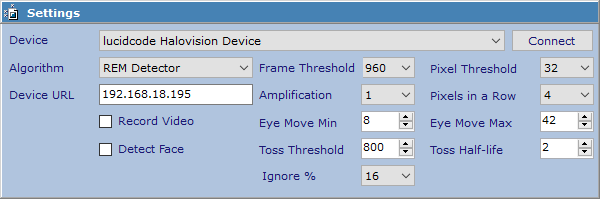
I used the following settings and had only one false positive while settling down to sleep:
Download entry as Lucid Scribe Data (LSD) (605 MB).
|
|
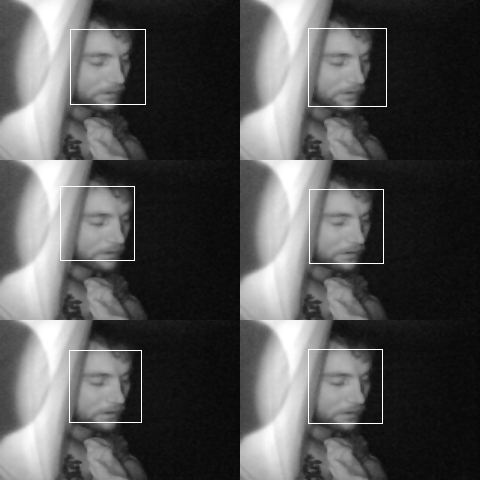
The INSPEC can now look for faces and only looks for eye movements within the area of a face, nuking a whole host of false positives from sleep artifacts like breathing. Sleep talking still gets past it – too shy to post a clip of that, but I figure if you are sleep talking there is a good chance you are dreaming and the inhibition of motor neurons from REM atonia just isn’t working around the mouth muscles.
The video above shows some eye movements at 4 am with the algorithm looking for a face multiple times a second. In order for the facial algorithm to work, I have to bend the “neck” of the device so it can see my face in portrait mode. The flexible tripod works perfectly for that.
I sometimes feel guilty about how hard the INSPEC has to work all night, but I am making it in hope of spreading lucidity, so at least it is for a worthy cause.
|
|
I added some more configuration options to the settings and the algorithm still worked! It picked up the eye movements when I was lying on my back with my head tilted slightly.
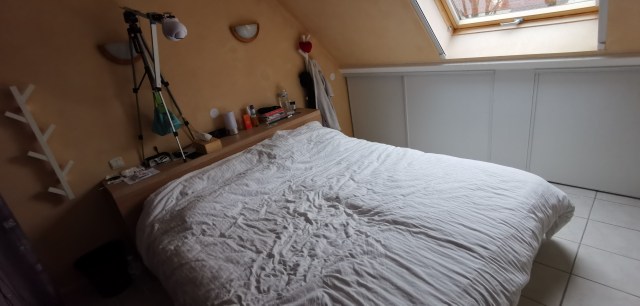
The device doesn’t have a clock when it is unplugged, so the date can now be configured if you want kind-of accurate timestamps on the files. It hovers on an insect-like tripod so the camera angle can now be controlled much better.
This recording better illustrates what the bitmaps look like that are saved to the SD card when eye-movement patterns are detected. Larger movements, especially in the mornings when there is some light from the rest of the spectrum still produce the deep-dream like images.
|
|
I want to believe I almost have the perfect version of the halovision device. Down to the size of a matchbox; no screen – only a night-vision camera, infrared LEDs and a processor powerful enough to run the latest machine vision algorithms at a decent rate. It records short GIFs along with BMP stills to a SD card and triggers bright LEDs when eye-movement patterns are detected after a long enough still phase. I don’t think I can make the GIFs as high-res as these “research” grade ones, I’m afraid, but good enough to see what it was detecting to help get into position. Woo hoo!
|
|
I recorded an interesting phenomenon throughout the second hour of last night’s session… I wanted to believe that I caught evidence of the fabled third eye because the camera doesn’t have an infrared filter and frequencies and all that, but – as a man of science, have to settle on finding the infrared spotlight reflecting off my forehead cool enough.
Download entry as Lucid Scribe Data (LSD) (321 MB).
|
|
The audio track woke me up after just a few seconds. My eyes can be seen opening in the real world after looking around in the dreamworld in the minute featured above. I have since started a shortlist of tracks that play only a few melodies for a couple of seconds that we have been having more luck with: Shortlist.
Download entry as Lucid Scribe Data (LSD) (103 MB).